Radical hospitality: what it means for a congregation, and what it does not

Almost every congregation describes itself as friendly. Visitors often see it differently. "Radical hospitality", the first of the five practices popularized by Robert Schnase's 2007 book Five Practices of Fruitful Congregations, is an attempt to close that gap: to move welcome from a pleasant atmosphere among people who already know one another to a deliberate, demanding habit aimed at people who do not yet belong.
Vine & Lintel is an independent publication. This explainer summarizes and discusses a public framework in our own words; it is not written by or for the author or publisher of the book.
What the phrase means
In the framework, hospitality is the practice by which a congregation invites, receives and cares for people who are not yet part of its life, and helps them find a place there. The adjective matters. "Radical" here does not mean politically extreme; it carries its older sense of going to the root. Hospitality at the root is not a program or a committee. It is a disposition of the whole community that asks, every week, who is missing and what it would take for them to come in and stay.
In an interview with the Lewis Center for Church Leadership the year the book appeared, Schnase said that this was the chapter readers responded to most strongly, and the adjectives in all five practice names were chosen to push congregations past comfortable habits toward a more costly kind of faithfulness. Hospitality was placed first for a practical reason: the other practices cannot take root in people who never arrive, or who arrive once and quietly do not return.
Roots in Scripture and tradition
The idea is far older than any church-growth book. The Hebrew Scriptures repeatedly command care for the stranger, grounded in Israel's own memory of being strangers in Egypt. Abraham and Sarah's welcome of three visitors at Mamre became a classic image of hospitality that turns out to be an encounter with God. In the Gospels, Jesus eats with people others keep at a distance, and the letter to the Hebrews urges readers not to neglect hospitality to strangers. The Rule of Saint Benedict, written in the sixth century, tells monks to receive every guest as Christ.
The Methodist movement that shaped Schnase's own denomination grew through small, accountable groups that gave newcomers a place to belong quickly. That history helps explain the emphasis: in this tradition, welcome is not merely courtesy but a means by which people are drawn into a life of grace.
What radical hospitality looks like in practice
Congregations that take this practice seriously tend to work on several fronts at once:
- Before the visit. A clear website with service times, parking, accessibility and what to expect with children; signs that make sense to someone who has never been inside the building.
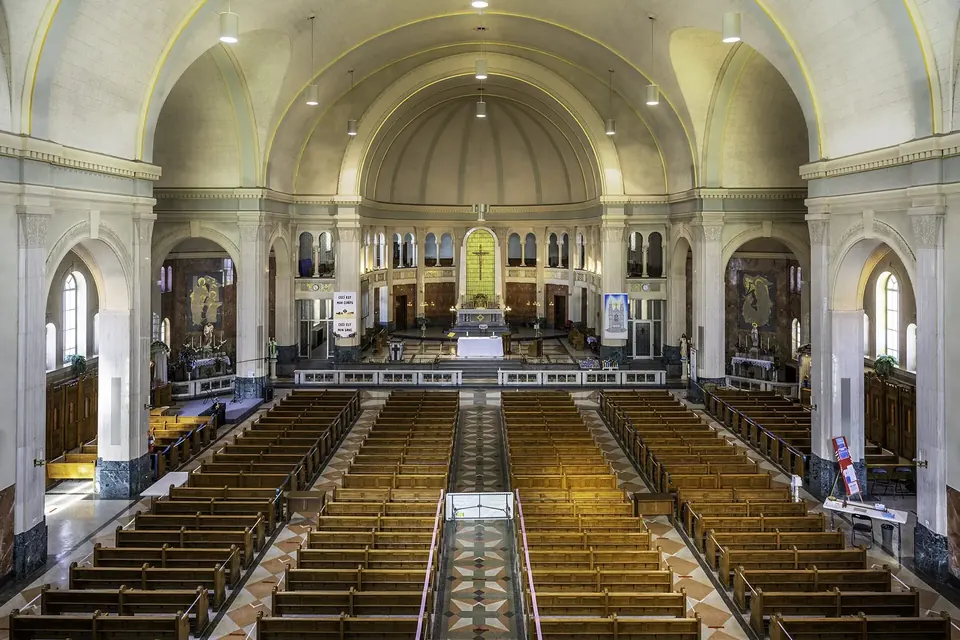
- At the door and in the seats. Greeters who notice and introduce rather than simply hand out bulletins; regular attenders willing to give up "their" pew or parking space; worship that explains itself without condescension.
- After the visit. A prompt, personal and low-pressure follow-up; an easy next step such as a meal, a class or a service project.
- Over the first year. Deliberate paths into relationships, small groups and responsibility, so that a newcomer becomes a participant and not a permanent guest.
- Beyond Sunday. Welcome extended to people who use the building during the week, to neighbors, and to people who differ in age, language, income or ability from the current members.
Common ways churches fall short
The most frequent failure is mistaking warmth among members for welcome to outsiders. A lively coffee hour in which every circle is already closed can feel colder to a visitor than an empty room. Other recurring problems include:
- Delegating welcome. When hospitality belongs to a greeting team, everyone else feels released from it.
- Welcome with conditions. Visitors quickly sense whether they are wanted as themselves or as potential volunteers and donors.
- Insider language. Acronyms, unexplained rituals and announcements that assume everyone knows where "Fellowship Hall" is.
- Hospitality without follow-through. A warm first Sunday followed by silence, or by no realistic way to join anything.
Some critics of church-growth thinking worry that "hospitality" can become a marketing technique aimed at filling seats. That risk is real, and the framework itself frames welcome as an expression of God's grace rather than an attendance strategy. A useful test is whether a congregation would still practise hospitality toward people who are unlikely ever to join, give or attend regularly.
Hospitality and the other four practices
Hospitality is an entry point, not a destination. Its fruit depends on what newcomers find once they arrive: worship that is alive, places to learn and grow with others, opportunities to serve and a culture of generosity. Equally, a church that excels at those four but neglects welcome tends to grow older and smaller, however healthy it feels from inside.
Questions for a leadership team
- When did each of us last bring someone new to worship or another activity? What made it easy or hard?
- Ask two people who started attending in the last year to describe their first visit. What did they notice that we no longer see?
- What happens, concretely, in the week after someone visits for the first time? Who is responsible?
- Which groups in our neighborhood are absent from our congregation? What would welcome look like from their point of view?
- What one habit could we change this season that would make welcome everyone's responsibility rather than a team's?
Sources and further reading
- Lewis Center for Church Leadership, "An Interview with Bishop Robert Schnase", Leading Ideas, July 2007.
- Abingdon Press, author page for Robert Schnase (lists the five practices and translations of the book).
- Life and Leadership, summary of Five Practices of Fruitful Congregations (independent book summary).
- Genesis 18:1–8; Leviticus 19:33–34; Luke 14:12–14; Hebrews 13:2; Rule of Saint Benedict, chapter 53.
 The five practices
Passionate worship
Worship that is alive and prepared, whether it uses an organ, a band or both.
 The five practices
Intentional faith development
Small groups, classes and mentoring: how a church helps faith grow beyond Sunday.
 Notebook
Fruitfulness is more than numbers
Counting matters, but counts are not the fruit. How to measure without being ruled by the measure.