Risk-taking mission and service: serving beyond comfort and beyond the walls
Most congregations do some good in the world: a food drive at Thanksgiving, a mission offering, a team that repairs roofs. The fourth of the five practices asks a harder question. "Risk-taking mission and service" describes service that costs something, that takes people beyond what is comfortable and familiar, and that changes the people who serve as much as the people served.
Vine & Lintel is an independent publication. This explainer discusses a public framework in our own words and is not affiliated with its author or publisher.
What makes service "risk-taking"
In Five Practices of Fruitful Congregations, mission and service cover everything a congregation does to make a difference in the lives of others outside its own membership, locally and globally, from hands-on volunteering to support for agencies and work for justice. The adjective is the challenge. Service becomes risk-taking when it involves real exposure: to people whose lives differ sharply from ours, to places where we feel out of our depth, to failure, to criticism, to giving time and energy we had planned to keep.
The underlying conviction is theological rather than strategic. The Gospels describe Jesus touching people considered unclean, crossing social boundaries and sending followers out with little. The parable of the sheep and the goats in Matthew 25 locates Christ among the hungry, the sick and the imprisoned. In the Wesleyan tradition, visiting prisons and the sick and teaching the poor were treated as ordinary parts of discipleship, not optional extras.
Three forms of mission
It helps to distinguish three overlapping forms, each with its own strengths and risks:
- Relief. Meeting immediate needs: meals, shelter, clothing, disaster response. Essential in a crisis; insufficient when the same needs return every week.
- Development and partnership. Working alongside a community over years on education, health, housing or income, with local people setting priorities. Slower and less photogenic, often more lasting.
- Advocacy. Addressing the policies and conditions that create need. Often the riskiest form for a congregation, because it can divide members, yet it is part of the tradition's social witness.
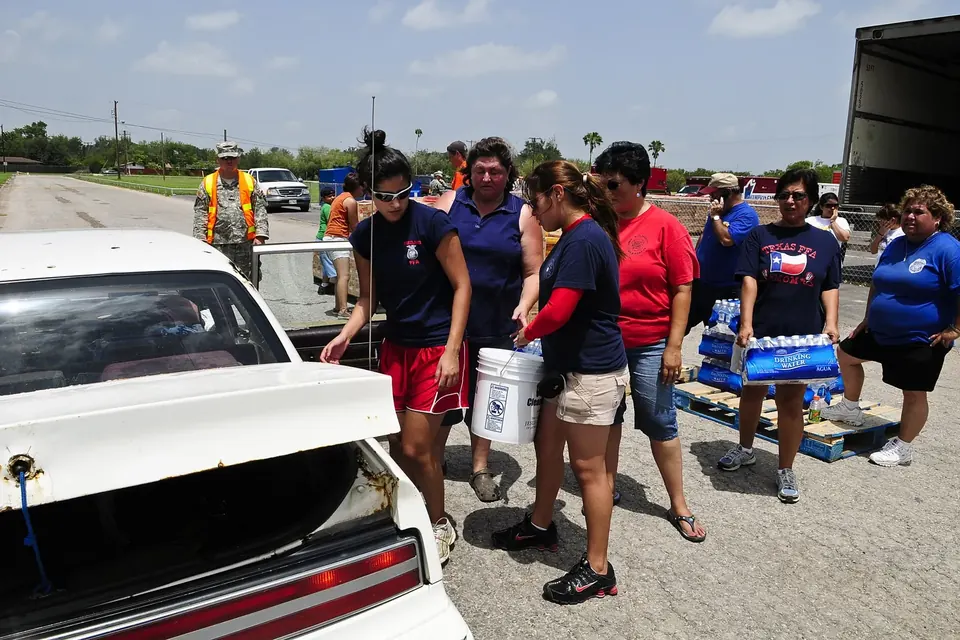
Disaster response offers a familiar example. After floods, tornadoes and hurricanes, church volunteers frequently arrive first and stay longest, often coordinated through denominational relief agencies that train volunteers and work with local authorities. The best of this work moves from relief to long-term rebuilding and is led by the needs of affected residents rather than the schedules of visiting teams.
Short-term mission trips: help and harm
Volunteer mission trips, domestic and international, are among the most visible forms of congregational service. They can transform participants and build lasting friendships. They can also impose on host communities, displace local labor, or turn poverty into a backdrop for visitors' experiences. Congregations that do this well tend to work with long-term partners, let hosts define the work, prepare participants carefully, keep teams small and give generously to local leadership between visits. Debriefing after a trip is as important as preparation before it.
Signs a congregation is growing in this practice
- Members can name people outside the church whom they know by name because of shared work, not only "clients" they serve.
- Mission involves all ages, including children and older adults.
- Service is connected to worship, prayer and study, so people reflect on what they are learning.
- The congregation's budget and calendar show mission as a priority, not a leftover.
- The church is willing to start something, see it fail, learn and try again.
Common pitfalls
- Mission by check alone. Financial support matters, but a congregation that only writes checks misses the formation that comes from direct involvement.
- Doing for rather than with. Projects designed without the people they are meant to help rarely last.
- Burnout. The same few volunteers carry everything until they quit.
- Avoiding conflict. Steering away from every issue that might cause disagreement can leave a congregation unable to speak about the causes of the needs it meets.
Starting small
Risk does not have to mean a dramatic project. For a congregation that has rarely served outside its walls, the first risk may be a monthly meal cooked and eaten with residents of a nearby shelter, rather than delivered to them. For another, it may be opening the building on weekdays to a community group with different values, or partnering with a congregation of another language or tradition across town. What matters is that the step stretches the congregation a little beyond what is comfortable, is undertaken with partners rather than for them, and is reviewed honestly afterwards. Small risks that are reflected on build the confidence and relationships that make larger ones possible.
Questions for a mission team
- Which of our current mission efforts would continue if our congregation disappeared tomorrow, because local partners own them?
- Where are we doing relief year after year for a need that could be addressed at its root?
- Who in our community have we never served alongside, and why?
- What is one risk, of time, money or reputation, we believe we are being called to take in the next year?
- How do we help people reflect on what they learn when they serve?
For how this practice relates to the denomination-wide priorities United Methodist leaders adopted in 2008, including ministry with the poor and global health, see our essay on the five practices and the four areas of focus.
Sources and further reading
- Lewis Center for Church Leadership, "An Interview with Bishop Robert Schnase", July 2007 (on the meaning of the adjectives in the practice names).
- Abingdon Press, author page for Robert Schnase.
- Life and Leadership, summary of Five Practices of Fruitful Congregations.
- Matthew 25:31–46; Luke 10:25–37.
 The five practices
Extravagant generosity
From annual campaigns to a culture of giving: how congregations can talk about money honestly.
 The five practices
Intentional faith development
Small groups, classes and mentoring: how a church helps faith grow beyond Sunday.
 Notebook
Wesley's Covenant Prayer
From Spitalfields in 1755 to January services today: the history and shape of covenant renewal.