Fruitfulness is more than numbers: measuring what matters in a congregation
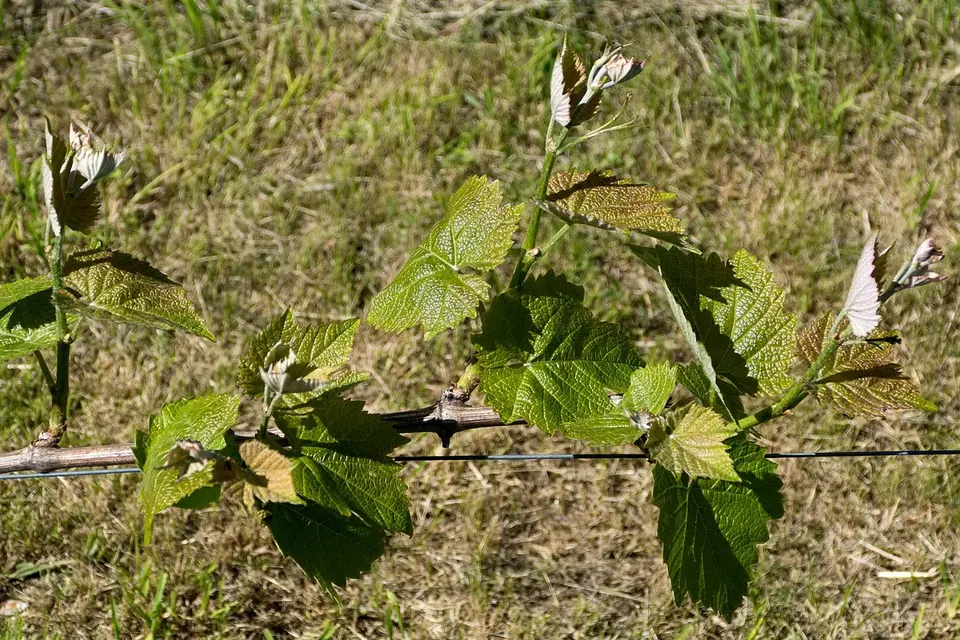
"Fruitful" is a lovely word with an awkward problem. In the Gospel of John, Jesus calls himself the vine and his followers the branches, and says that branches bear fruit by abiding in him. In church planning documents, fruit is often measured in attendance, professions of faith and offering receipts. Both meanings are legitimate. Confusing them is one of the most common ways congregations lose their way.
Why the image of fruit
The biblical image is organic, not mechanical. Fruit grows; it is not manufactured. A vine needs tending, pruning, sun and time, but no gardener can force a grape. In John 15 the fruit depends on remaining connected to the vine. In Galatians 5 Paul lists the "fruit of the Spirit" as love, joy, peace, patience, kindness, goodness, faithfulness, gentleness and self-control, none of which shows up in a parochial report. Jesus' parables of the sower and the mustard seed stress that growth is often hidden, slow and surprising.
Yet the same Scriptures are not shy about numbers. Acts records three thousand baptized at Pentecost and believers "added daily". The parable of the talents praises servants who multiplied what they were given. Fruit is visible eventually. A tree that never bears is cut down in another parable. The image therefore cuts both ways: it warns against equating faithfulness with quick results, and it warns against excusing barrenness as spiritual depth.
What churches count, and why
Most denominations ask congregations to report statistics every year: membership, average worship attendance, baptisms and professions of faith, participation in groups, mission giving and total income. In the 2010s The United Methodist Church went further, encouraging congregations to set goals and track a small set of vital-signs measures through an online dashboard as part of its emphasis on "vital congregations". The rationale was reasonable. Without numbers, leaders rely on impressions, and impressions are notoriously flattering. Numbers reveal trends that no one wants to see: a decade of slow decline, a youth group that has quietly aged into an adult class, a mission budget that has not grown in years.
Goodhart's law in the parish
Economists know a principle usually attributed to Charles Goodhart: when a measure becomes a target, it ceases to be a good measure. Schools that are judged on test scores teach to the test. Hospitals judged on waiting times find ways to start the clock later. Congregations are not immune. If attendance is the target, churches drift toward events that draw crowds rather than practices that form disciples. If professions of faith are the target, there is pressure to rush people into membership. If giving is the target, the poor can become invisible.
The deeper problem is that the most important fruits are the hardest to count. How do you measure a reconciliation between estranged family members, a prisoner visited faithfully for ten years, a teenager who decides to become a nurse because of a mission trip, or an elderly member who dies at peace because her small group never stopped visiting? A congregation that measures only what is easy to count will gradually value only what is easy to count.
Better ways to use numbers
None of this argues for abandoning measurement. It argues for using numbers as questions rather than verdicts.
- Look at trends, not snapshots. One Sunday's attendance says nothing; ten years of attendance say a great deal.
- Measure participation, not only presence. How many people are in a group, serve somewhere or give regularly tells more about vitality than how many sit in worship.
- Pair numbers with stories. Ask what a figure means in people's lives. A rise in mission giving may reflect one large gift or a widening culture of generosity.
- Count newcomers who stay. The number of first-time visitors who are still involved a year later is one of the most revealing measures of hospitality.
- Ask qualitative questions regularly. Short conversations or surveys asking members whether they are growing in faith, where they serve and what helps them pray.
- Measure against your own past. Setting your figures beside those of congregations in very different places can mislead; the useful benchmark is your own congregation five years ago.
Fruit that grows elsewhere
One more caution. Some of a congregation's most important fruit ripens in other places. A small rural church that has raised generations of young people who moved to cities and now lead congregations there may show steady decline on paper while having been extraordinarily fruitful. A church that gives away its best members to start a new congregation across town loses numbers and gains a harvest. Statistics bounded by a single congregation miss this entirely.
Questions for a church council
- Which three numbers do we look at most often? What do they leave out?
- What story could we tell from the past year that no statistic captures?
- Where might we be "teaching to the test", doing things that improve our numbers without forming disciples?
- What fruit of our congregation is growing somewhere else?
- If we could measure only one thing next year, what would best tell us whether we are faithful?
The 2010 study behind the United Methodist emphasis on vitality is discussed in our essay on the Call to Action and its drivers of vitality.
Sources and further reading
- John 15:1–8; Galatians 5:22–23; Mark 4:1–32; Acts 2:41–47; Luke 13:6–9.
- Charles Goodhart, "Problems of Monetary Management: The U.K. Experience" (1975), the origin of the principle later generalized as Goodhart's law.
- UM News, "Call to Action Steering Team Releases Final Report", 2010.
- Lewis Center for Church Leadership, "An Interview with Bishop Robert Schnase", July 2007.
 Notebook
Why "practices"?
Programs end; practices are repeated and improved. What the word changes for church planning.
 The five practices
Radical hospitality
Welcome that goes beyond the greeter at the door: what the first practice asks of a church.
 Notebook
Remember the Future
Thirty days of preparation before a General Conference, and how to pray through change.