Passionate worship: alive, prepared and open to God, whatever the style
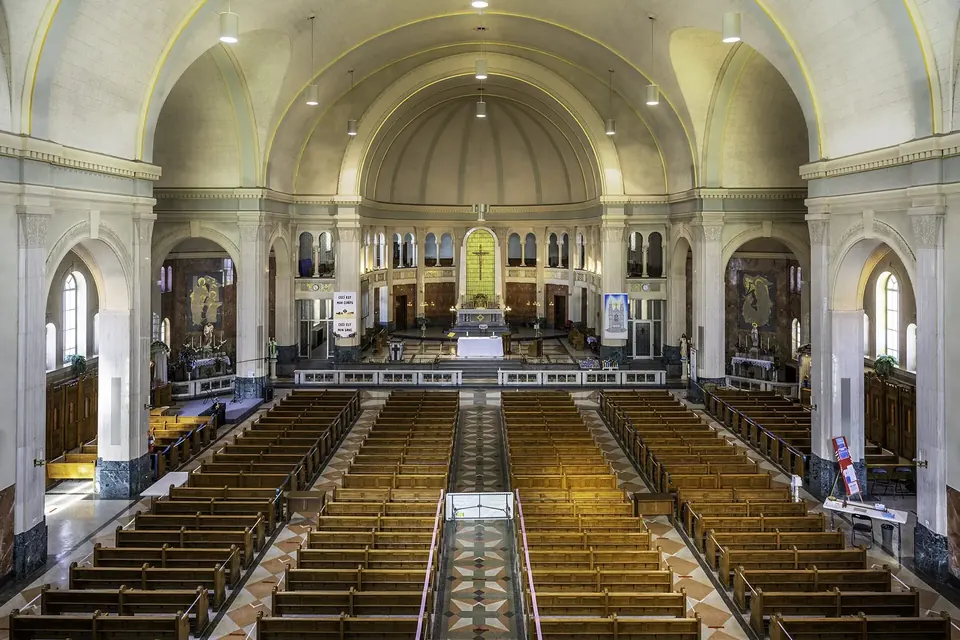
Arguments about worship in congregations often turn into arguments about music: organ or band, hymnal or screen, robes or jeans. The second of the five practices deliberately sidesteps that debate. "Passionate worship" is about whether worship is alive, whether the people who plan and lead it expect something to happen, and whether those who attend leave changed. That can be true in a cathedral liturgy or in a gymnasium on folding chairs, and it can be missing from both.
Vine & Lintel is an independent publication. This explainer discusses a public framework in our own words and is not affiliated with its author or publisher.
What "passionate" means here
The adjective is easily misread as a call for emotional intensity or for one style of expressive worship. In the framework set out in Five Practices of Fruitful Congregations (Abingdon Press, 2007), the word points to authenticity and expectancy rather than volume. Passionate worship is prepared with care, led by people who believe what they are saying and singing, and designed so that worshippers can encounter God rather than merely watch a performance. Its opposite is not quiet worship; it is worship on autopilot, where everyone, including the leaders, is going through motions they no longer notice.
In the book's logic, worship is the practice where a congregation most visibly gathers as a body, hears Scripture together, prays for the world and is sent out. If hospitality brings people through the door, worship is often what decides whether they return.
Marks of living worship
- Preparation. Readings, prayers, music and preaching planned together around a clear theme, early enough for the pieces to fit.
- Excellence proportionate to the setting. Not professional polish, but the best a congregation can offer with the gifts it has: rehearsed music, audible readers, a sermon that has been worked on.
- Participation. Prayers, responses, songs and silence that invite people in rather than asking them to watch.
- Connection to life. Prayers that name real needs in the community and the world; preaching that connects ancient texts to Monday morning.
- Clarity for newcomers. A service someone unfamiliar with church can follow without embarrassment.
- Sending. Worship that ends by pointing people toward service, learning and generosity during the week.
What research says about worship and vitality
In 2010 The United Methodist Church commissioned the consulting firm Towers Watson to analyze data from more than 32,000 of its congregations in the United States as part of its "Call to Action" process. The study grouped the factors it associated with "vital congregations" into four areas: small groups and programs, lay leadership, pastoral leadership and worship services. Two worship findings drew attention. First, churches offering a mix of traditional and contemporary services were more likely to be rated highly vital than churches offering only one style; reporting at the time noted that only 31 percent of churches with traditional services alone, and 21 percent of those with contemporary services alone, scored high on vitality. Second, in larger churches, pastors who devoted more time to preaching and planning worship were associated with higher vitality.
These are correlations across thousands of churches, not recipes. Later guidance from the denomination's discipleship agency warned that in small congregations, splitting into two distinct services was more often associated with low vitality than high, since it can divide a small community in two. The more durable lesson is that attention to the quality and variety of worship, and the time leaders give to it, matters. See our essay on the Call to Action and its "drivers of vitality" for more on the study and its limits.
Where congregations struggle
- Worship as an insider event. Announcements, jokes and references that only regulars understand.
- Style wars. Energy spent defending preferences rather than asking what helps people pray.
- Overloaded volunteers. One musician or one tired pastor carrying everything, week after week, with no time to plan.
- No feedback. Few churches ever ask worshippers, especially newer ones, what helps or hinders them.
- Disconnection. Worship that never mentions the congregation's mission, its neighbors or its giving, so the other practices seem unrelated to Sunday.
Practical starting points
Small changes often make a larger difference than a new service. Planning a sermon series several weeks ahead allows musicians and readers to prepare. Training lay readers to read Scripture slowly and clearly honors both the text and the listeners. Adding a short, real silence after the sermon or during the prayers can change the atmosphere of a whole service. Inviting newer attenders to take part in planning brings fresh eyes. Many congregations also find that seasons such as Advent and Lent are natural moments to experiment, because people already expect something different.
Questions for worship planners
- If a first-time visitor described our service to a friend, what three words would we hope they use? What three words might they actually use?
- How far ahead do we plan? What would change if we planned four weeks further ahead?
- Where in our worship do people participate rather than watch?
- How do our prayers and preaching connect with what is happening in our town this month?
- Whom could we invite, who is not usually asked, to help plan or lead worship next season?
Sources and further reading
- UM News, "New Study Identifies Key Factors Impacting Vital Congregations", 2010.
- The Christian Post, report on the Towers Watson vitality study (worship and pastoral findings).
- Discipleship Ministries of The United Methodist Church, study guide on the Call to Action worship findings.
- Lewis Center for Church Leadership, "An Interview with Bishop Robert Schnase", July 2007.
 The five practices
Radical hospitality
Welcome that goes beyond the greeter at the door: what the first practice asks of a church.
 The five practices
Intentional faith development
Small groups, classes and mentoring: how a church helps faith grow beyond Sunday.
 Notebook
Wesley's Covenant Prayer
From Spitalfields in 1755 to January services today: the history and shape of covenant renewal.