Wesley's Covenant Prayer and the covenant renewal service: history and practice
Every January, in Methodist congregations around the world, worshippers pray a prayer that begins by giving themselves away entirely. The covenant renewal service is one of the most distinctive gifts of the Wesleyan tradition to Christian worship, and one of the most demanding. It fits naturally with the practices of passionate worship and intentional faith development, because it asks a congregation to say, together and out loud, what it means to belong to God.
Origins: Spitalfields, 1755
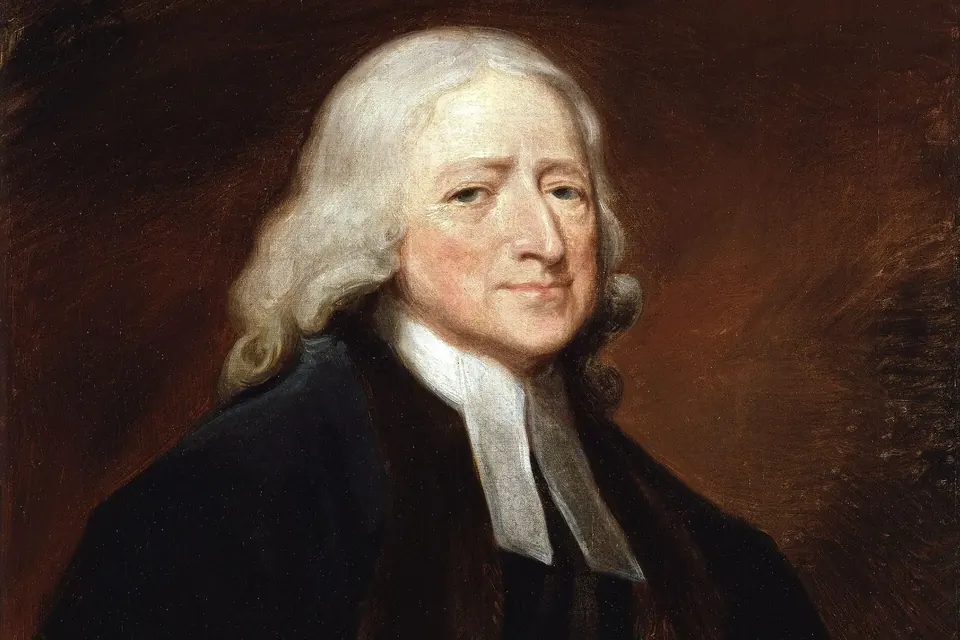
John Wesley drew the idea of a personal covenant with God from English Puritan writers, especially Joseph Alleine and his father-in-law Richard Alleine, whose devotional writings described a solemn act of self-dedication. Wesley adapted it for his Methodist societies. His journal records the first covenant service on 11 August 1755, held in the French church at Spitalfields in London, with about 1,800 people taking part. The service became a regular feature of Methodist life, usually held at the start of the year.
The words Wesley used in 1755 have not survived in full. In 1780 he published a pamphlet, Directions for Renewing Our Covenant with God, which is thought to reflect them and which became the basis for later services. In the twentieth century British Methodists revised the service substantially, and a shorter, modern form of the prayer became widely known. Versions of the service and prayer appear in the worship books of many Methodist churches, including The United Methodist Church in the United States, where the service is often paired with Charles Wesley's hymn "Come, Let Us Use the Grace Divine", number 606 in The United Methodist Hymnal.
The shape of the service
Covenant services vary, but most share a recognizable structure:
- Adoration and thanksgiving for God's grace and faithfulness.
- Readings about covenant, often from Jeremiah 31 on the new covenant written on the heart, and from the Gospels.
- Confession, frequently a searching, detailed one, naming ways the community and its members have failed to live as God's people.
- The covenant itself, introduced by an explanation of what is being promised, and then prayed together.
- Holy Communion, in many traditions, as a sign of the covenant sealed by Christ.
- Sending, with a hymn and blessing.
Congregations often print the service in a separate order of worship. Some invite worshippers to sign and date a card with the covenant words and keep it through the year, a practice that recalls the personal covenants of the Puritan writers Wesley admired.
The prayer, briefly
The best-known modern form of the Covenant Prayer begins with a declaration of belonging to God rather than to oneself, and then moves through a series of paired opposites. In paraphrase: the one praying offers to be put to work or set aside, to be honored or overlooked, to be filled or emptied, to have plenty or nothing, and gives everything to God's purposes. It ends by sealing the covenant on earth and asking that it be confirmed in heaven.
What makes the prayer startling is its refusal of the usual bargain. Most prayers ask for good outcomes. This one accepts in advance that faithfulness may bring suffering, obscurity or loss. It is not a prayer of resignation, however; it is a prayer of trust. Its pairs describe the ordinary ups and downs of a life of service, and place both sides in God's hands.
For congregations, three lines of reflection are especially fruitful. The first concerns usefulness: many committed members find it harder to accept being "laid aside" than to accept hard work, yet churches flourish when people can hand on roles gracefully. The second concerns suffering: following Christ brings people close to those who suffer, and that proximity costs something, which links the prayer to risk-taking mission and service. The third concerns possessions: "having nothing" is a startling thing to pray in a consumer culture, and connects the prayer to extravagant generosity.
Practical notes for congregations
- Use a simple order. Our printable order and planning sheet (PDF) follows the structure above and leaves the prayer text to your own worship book.
- Explain before praying. Visitors and newer members may never have heard the prayer. A short introduction about its history and meaning helps people pray it honestly rather than recite it.
- Give space. Silence before the covenant words allows people to consider what they are about to promise.
- Use the full year. Some congregations return to the prayer in small groups during the year, one line at a time, as a study.
- Mind copyright. Wesley's 1780 text is in the public domain; some modern liturgical versions are under copyright. Use the version authorized in your own denomination's worship book, or check permissions before printing.
- Connect to commitments. The service can be a natural moment to invite people into service, groups or giving for the new year, as long as it does not become a pledge drive.
Why it endures
The covenant service has survived more than two and a half centuries of liturgical change because it says something congregations need to hear and rarely say: that belonging to God reorders everything else. In an era of consumer religion, where churches can be chosen and left like any other service, a public act of self-giving is countercultural. It reminds a congregation that its practices are not techniques for institutional health but ways of responding to grace.
Sources and further reading
- Wikipedia, "Covenant Renewal Service" (history, Spitalfields 1755, 1780 pamphlet).
- Discipleship Ministries of The United Methodist Church, "Covenant Renewal".
- Discipleship Ministries, "History of Hymns: 'Come, Let Us Use the Grace Divine'".
- Methodist Church in Singapore, "The Methodist Covenant Service".
- Jeremiah 31:31–34; Romans 12:1–2.
 Notebook
Remember the Future
Thirty days of preparation before a General Conference, and how to pray through change.
 The five practices
Passionate worship
Worship that is alive and prepared, whether it uses an organ, a band or both.
 Notebook
Why "practices"?
Programs end; practices are repeated and improved. What the word changes for church planning.