Christmas Eve visitors: a radical hospitality checklist for the busiest service of the year
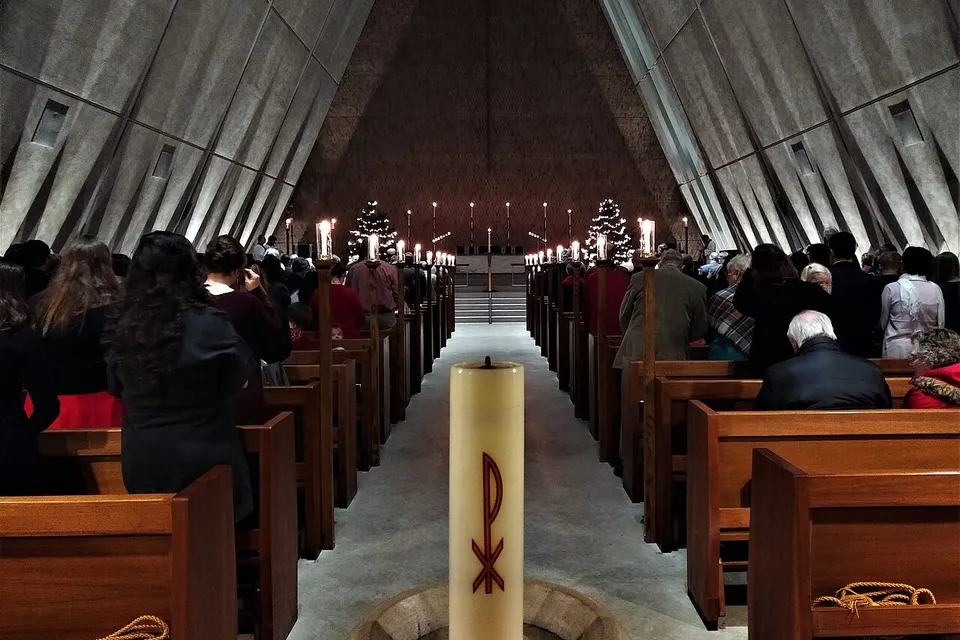
Advent begins this Sunday, 29 November, and in four weeks many congregations will hold the most crowded service of their year. Christmas Eve falls on a Thursday in 2026. For a church that takes radical hospitality seriously, it is the one evening when the people the practice is about, those who seldom or never come, are actually in the pews. Here is what the surveys tell us about them, and a checklist to plan the welcome now rather than on 24 December.
Who comes at Christmas, and why
Two studies by Lifeway Research give a useful picture for American congregations. In a survey of 1,000 Protestant pastors in 2022, 48% said a Christmas Eve service was their church's largest event of the holiday season. The figure was higher among mainline pastors than among evangelicals (60% against 44%), and Lutherans topped the list at 84%. Very few pointed to Christmas Day itself (7%).
On the side of the public, a 2024 Lifeway survey of US adults found the country split: 47% said they typically attend church at Christmastime, 48% said they do not. Among those who attend, 60% said they go to honour Jesus; smaller groups cited tradition (16%), being with family and friends (15%) or getting into the Christmas spirit (8%). The religiously unaffiliated who do come were the most likely to say they come for family and friends (42%).
The most useful figure for a hospitality team is about invitations. Among people who do not usually go to church at Christmas, a majority of Catholics (71%), Protestants (65%) and people of other religions (58%) said they would be likely to attend if invited; even among the unaffiliated, 40% said so. In other words, the guests of Christmas Eve are often there because someone asked them, and they arrive with family expectations rather than with a knowledge of your church's habits.
Before: the invitation and the information
- Make inviting easy. A simple card or digital image with the service times, address and parking information gives members something to pass on. The congregation in Florissant, Missouri, whose 2009 series on the five practices we describe in our page on preaching hospitality, did exactly that with postcards to its neighbourhood.
- Publish the practical details early. Times, length of each service, whether children are welcome at the late service, where to park, which door is open, step-free access. Your website and online map listings are where many guests will look first, often on the day itself.
- Choose service times with guests in mind. An early family service and a later candlelight service serve very different people. Say clearly which is which.
At the door and in the pew
- Station greeters outside, not just inside. First-time visitors hesitate on the pavement. A greeter at the gate or in the car park answers the first question before it is asked: "Is this the right door?"
- Keep good seats free. Regulars tend to fill the back and the aisles. Asking members to move to the centre of the pews, or reserving the rear rows for latecomers and families with small children, is one of the simplest acts of welcome.
- Print the whole service. A guest should never need to know a response, a tune or a moment to stand by heart. Words for carols, prayers and the Lord's Prayer belong in the bulletin or on screen.
- Explain Communion and candles. If the service includes the Lord's Supper or a candle-lighting, one sentence on who may take part and how avoids awkwardness. For candles, think about safety around children and drip guards.
- Do not single people out. Asking visitors to stand or raise a hand embarrasses many of them. A welcome from the front, addressed to everyone, does the job.
After: the week that decides
Radical hospitality is not measured by a full church on one night but by what happens next. Our note on fruitfulness beyond numbers makes the same point about attendance figures in general. A few habits help:
- Offer a light way to stay in touch. A card or QR code for those who want news, never a mandatory form.
- Name a next step that is easy. A New Year's service, a January study group or a community meal is a gentler invitation than "come back on Sunday".
- Thank the members who invited. They did the hardest part of the welcome.
- Debrief as a team. In early January, ask greeters and ushers what confused guests. The answers are your agenda for next year.
For small congregations
Not every church fills up on Christmas Eve. In the 2022 pastors' survey, the timing of the largest event varied with size and tradition, and congregations of fewer than 50 people were the least likely to see their biggest crowd in the third week of December. For a small church, hospitality may mean something else: a shared service with a neighbouring congregation, a simple carol evening that guests can follow without a hymnbook, or a personal phone call to the people who came last year. The principle is the same: plan for the person who knows nobody.
Planning the calendar
With Advent starting on 29 November and Christmas Eve on Thursday 24 December, most congregations have three or four Sundays to recruit greeters and prepare the material. If you plan around the church year, our church year calendar gives the dates of Advent, Christmas, Ash Wednesday and Easter for any year. The question to ask in the meeting this week is simple: if someone comes to our church for the first time on Christmas Eve, what will they understand, and what will make them want to come back?
Sources
- Lifeway Research, "Pastors say Christmas Eve is most-attended holiday service", 29 November 2022 (phone survey of 1,000 Protestant pastors, 6-30 September 2022).
- Lifeway Research, "Less than half of Americans attend church at Christmas", 3 December 2024 (survey of US adults, August 2024).