A single line: Advent, Christmas poetry and "the Word became flesh"
Every December, preachers, choirs, teachers and artists attempt the same impossible task: to describe what Christians believe happened at Christmas, that God came to live among people as a human child. The volume of words is enormous. And yet many people, asked what has stayed with them from a lifetime of Christmases, name a single line.
The season of Advent
In Western churches Advent covers the four Sundays before Christmas, beginning on the Sunday nearest 30 November. It is a season of waiting and preparation with two horizons: remembering the long expectation of Israel before Christ's birth, and looking toward Christ's coming in the future. Its readings move from apocalyptic warnings to John the Baptist's call to repentance and finally to the announcements made to Mary and Joseph.
Advent sits uneasily with the surrounding culture, which begins celebrating Christmas in November and has largely finished by the 26th of December. Many congregations find that keeping Advent, with its quieter music and its emphasis on hope and longing, is one of the clearest ways their worship can differ from the shopping calendar.
One verse
The Gospel of John contains no shepherds, no manger and no star. Instead it opens with a hymn-like prologue about the Word who was with God in the beginning. Then, in John 1:14, comes the sentence that summarizes the whole Christmas story: "And the Word became flesh and lived among us." The Greek verb translated "lived" suggests pitching a tent, an echo of the tabernacle in which God dwelt among Israel in the wilderness.
Theologians have written libraries on that verse, and should. But it also works on its own. Read slowly, aloud, at the end of a long service of carols, it can say in a few seconds what an hour of explanation cannot.
The poetry of Christmas
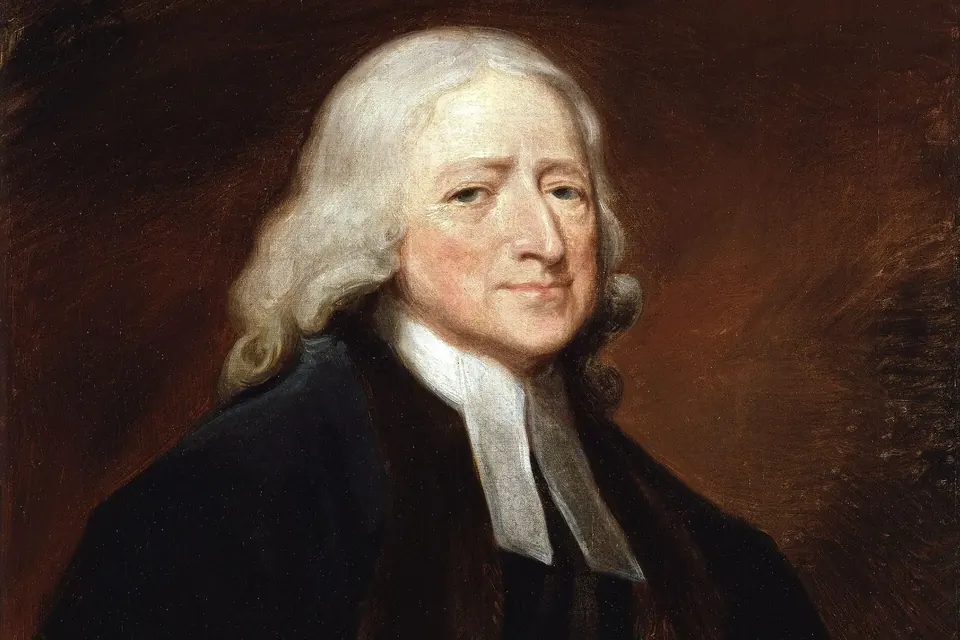
Poetry has always been one of the main ways Christians have explored the mystery of the incarnation, because a good poem can hold together ideas that prose keeps apart. Charles Wesley, the most prolific hymn writer of the Methodist movement, returned to Christmas again and again. In "Hark! the Herald Angels Sing", first published in 1739 and later reworked by others, one line compresses a whole doctrine: "Veiled in flesh the Godhead see." In a lesser-known hymn of 1745, "Let Earth and Heaven Combine", he writes of God "contracted to a span", the infinite made the size of a hand's breadth, and "incomprehensibly made man".
Lines like these do not explain the incarnation; they let worshippers stand in front of it. That is also what good Christmas poetry outside hymnals does, from medieval carols to modern verse written for a single congregation's Christmas Eve service.
Letting one line carry worship
For those who plan worship, the lesson is practical. Seasons crowded with events and music can become exhausting rather than transforming. A single line, chosen carefully and repeated, can give a season shape.
- Choose one verse or hymn line for the season and return to it each Sunday: in a call to worship, on a printed card, in a sung response.
- Read it slowly. Allow silence before and after. A line heard once in a rush is easily lost.
- Invite people to carry it home. A line on a fridge or by a bed can shape a household's December more than a sermon heard once.
- Pray with it. The old practice of lectio divina, reading a short passage several times and noticing which word or phrase stands out, suits Advent well and fits naturally with intentional faith development.
- Encourage local poetry. Some congregations invite members to write short Advent poems or prayers. The results rarely rival Wesley, but they help people put their own faith into words.
Questions for reflection
- Which single line from Scripture or a hymn has stayed with you from past Christmases, and why?
- What would it mean for our congregation to keep Advent as a season of waiting rather than an early Christmas?
- Where in our worship could we use fewer words, so that the words we do use are heard?
Sources and further reading
- John 1:1–14 (NRSV Updated Edition).
- Encyclopaedia Britannica, "Advent".
- Hymnary.org, "Hark! the herald angels sing" and "Let earth and heaven combine" (texts and publication history).
- Wikipedia, "Lectio Divina".
 The five practices
Passionate worship
Worship that is alive and prepared, whether it uses an organ, a band or both.
 Notebook
Wesley's Covenant Prayer
From Spitalfields in 1755 to January services today: the history and shape of covenant renewal.
 The five practices
Intentional faith development
Small groups, classes and mentoring: how a church helps faith grow beyond Sunday.