Creative worship planning: short dramas, children's classes and simple planning forms
Creative worship rarely depends on a large budget or a professional staff. It depends on planning: enough time, a few people who share the work, and a simple way to keep track of ideas. Short dramas, visual elements and well-prepared children's classes all grow out of the same habit of thinking ahead.
A planning rhythm
Many pastors plan worship week by week, finishing the sermon on Saturday and choosing hymns at the last minute. That leaves no room for anyone else to contribute. Congregations that want more variety usually adopt a longer horizon.
- Season by season. Sketch themes and texts for a whole season, such as Advent and Christmas or Lent and Easter, two or three months ahead.
- Month by month. A small team meets to assign readers, musicians and any special elements for the coming month.
- Week by week. Final details, timing and rehearsals.
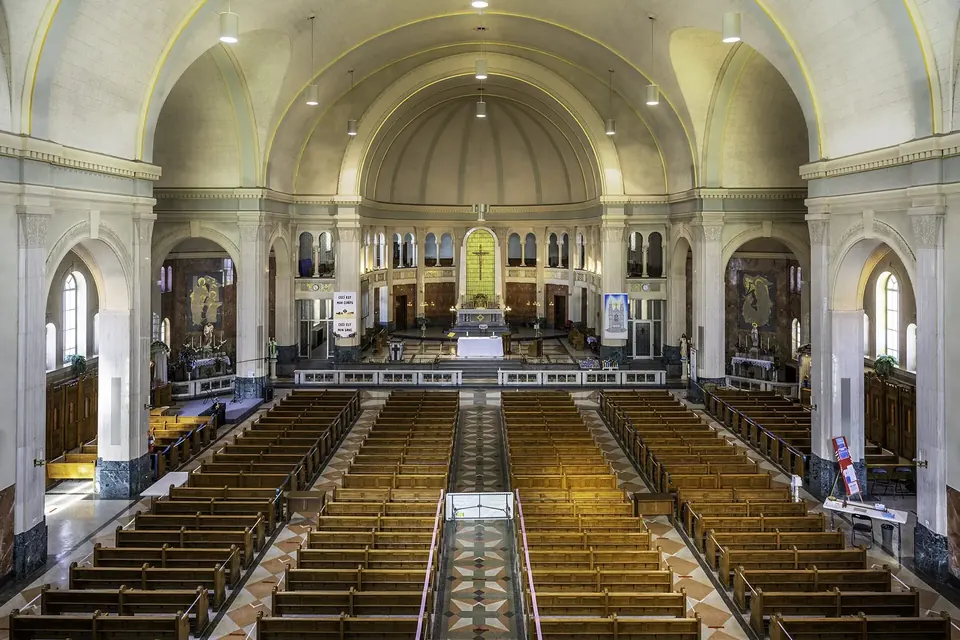
A worship team need not be large. Three or four people, including at least one musician and one person who works with children, can transform what is possible. The point is not to produce a show but to give more members a part in passionate worship.
What a planning form should contain
A one-page form, filled in for each service, keeps the team aligned. It does not need software; a shared document or a printed sheet works.
| Field | Why it helps |
|---|---|
| Date, season and liturgical color | Keeps the service in the church year. |
| Scripture readings and theme in one sentence | Gives musicians, readers and teachers a shared focus. |
| Order of service with approximate timings | Prevents overlong services and shows where a drama or visual element fits. |
| People and roles | Readers, musicians, ushers, children's leaders, technical help. |
| Special elements | Drama, visuals, testimony, response activity. |
| Children's connection | How Sunday school or the children's message links to the theme. |
| Permissions and notes | Licences for songs, scripts or projected images. |
| Review after the service | What worked and what to change next time. |
Using short dramas well
A two- to five-minute sketch can open a theme in a way a sermon introduction cannot. It works best when it raises a question rather than answering it, and when it is short, rehearsed and audible. Some guidelines:
- Keep the cast small and the props minimal. A chair and a table go a long way.
- Rehearse at least once in the worship space, with microphones if they are needed.
- Avoid sketches that mock people outside the church or turn serious subjects into easy jokes.
- Consider readers' theatre, in which a Bible passage is read by several voices. It requires little rehearsal and keeps the text at the center.
- Members can write their own material. Original sketches avoid permission questions and often speak more directly to the congregation.
Permissions to check
Licensing is easy to overlook. Church song licences, such as those offered by CCLI, cover reproducing the words of participating songs for congregational singing; they do not cover published drama scripts, books or most images found online. Many script publishers sell performance rights separately. For images, choose works in the public domain or under open licences and credit them as required. A line on the planning form is the simplest reminder.
Sunday school and children
When children's classes follow the same texts as the main service, families can talk about what they heard on the way home. Simple tools help teachers: a short summary of the passage, one question for discussion, one activity and one prayer. Teachers who receive the theme several weeks ahead can prepare without stress.
Planning for children also means planning for their safety. Many denominations have adopted policies requiring background checks, training and at least two unrelated adults present with children at all times. In The United Methodist Church this approach is known as Safe Sanctuaries. Whatever the tradition, the policy belongs on the planning calendar, not only in a filing cabinet. Children's ministry is part of intentional faith development, and it depends on trust.
After the service
The most neglected step in planning is review. A ten-minute conversation, or a few notes on the form, about what helped people worship and what distracted them, makes every following service better. Over a year those notes become a congregation's own handbook of creative worship.
Sources and further reading
- CCLI, Church Copyright License (what church song licences cover).
- Discipleship Ministries of The United Methodist Church, worship planning resources and Safe Sanctuaries.
- Joy Thornburg Melton, Safe Sanctuaries: Reducing the Risk of Abuse in the Church for Children and Youth, Discipleship Resources, 1998 (and later editions).
- Robert E. Webber, Planning Blended Worship: The Creative Mixture of Old and New, Abingdon Press, 1998.
- Wikipedia, "Readers theatre".
 The five practices
Passionate worship
Worship that is alive and prepared, whether it uses an organ, a band or both.
 The five practices
Intentional faith development
Small groups, classes and mentoring: how a church helps faith grow beyond Sunday.
NotebookWhy "practices"?
Programs end; practices are repeated and improved. What the word changes for church planning.