Fixing and healing: what the Joplin tornado suggests about how churches help after a disaster
Some things can be fixed. A broken pipe, a stalled engine or a damaged roof can be repaired by someone with the right skills and tools. People and communities are different: they heal, and healing is a process that can be supported but not manufactured. That distinction, obvious in a hospital, becomes urgent after a disaster, when many well-meaning helpers arrive ready to fix whatever they can reach.
Joplin, May 2011
On the evening of 22 May 2011, a tornado rated EF5, the highest category on the Enhanced Fujita scale, crossed the city of Joplin in southwest Missouri. It killed more than 150 people, injured more than a thousand, and destroyed or damaged thousands of homes, schools, businesses and churches, as well as one of the city's two hospitals. With damage estimated at around 2.8 billion dollars, it remains the costliest single tornado on record in the United States.
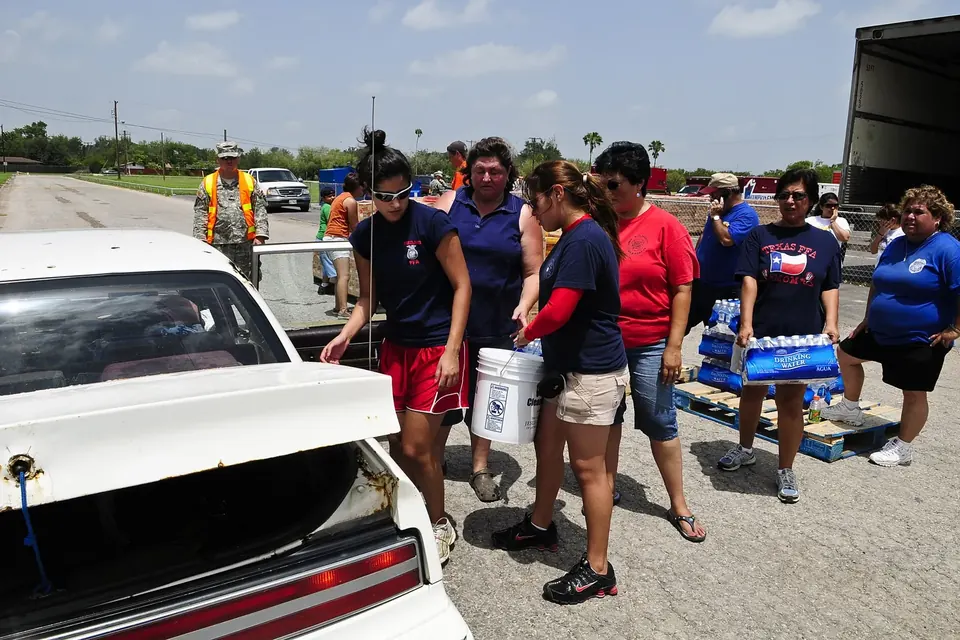
The response was immense. Emergency services, the federal government and state agencies were joined by faith-based organizations and by volunteers from across the country. United Methodist congregations in Missouri and elsewhere sent work teams for months and then years, and the denomination's relief agency, UMCOR, supported long-term recovery work. Joplin became, for a time, a national example of what a mobilized civil society can do.
What fixing can and cannot do
Volunteers can clear debris, frame walls, replace roofs and build access ramps. That work is essential, and it is the most visible part of any recovery. Yet the people who live through a catastrophe carry losses that no work team can repair: the death of family members and neighbors, the disappearance of familiar streets, the trauma of the event itself, the slow fatigue of insurance claims and temporary housing.
Medicine offers a helpful comparison. Surgeons set bones and remove damaged tissue, but they do not make the body heal; they create the conditions in which the body's own processes can do their work. The same is true of grief, broken relationships and traumatized communities. Helpers can protect, support, feed and accompany. Healing itself comes from within and, Christians believe, from God, who "heals the brokenhearted and binds up their wounds" (Psalm 147:3).
Seen this way, the most important actors in a community's recovery are not the visitors but the people who stay: local congregations, neighbors, schools and civic groups. Outsiders do best when they strengthen those local bodies rather than replace them.
Lessons for congregations that want to help
Disaster-response agencies have learned, often painfully, what helps and what hinders. Their advice translates directly into the practice of risk-taking mission and service.
- Do not self-deploy. In the first days after a disaster, unannounced volunteers can block roads and divert local responders. Work through an organized channel. UMCOR, for example, trains Early Response Teams and asks volunteers to go only when invited and coordinated.
- Give money rather than goods. Donated clothing and supplies often arrive in quantities that cannot be sorted or stored. Cash allows responders to buy exactly what is needed, frequently from local businesses that also need to recover. National voluntary-organization networks repeat this advice after every major event.
- Plan for the long term. Media attention fades within weeks; rebuilding takes years. Congregations that commit to a partnership over several seasons, with return visits and sustained giving, often do more good than those that send a single large team.
- Support the local church. Pastors and lay leaders in a stricken community are themselves survivors. Offering them rest, practical help and space to grieve strengthens the people who will still be there when every volunteer has gone home.
- Listen first. The questions "What do you need?" and "What would you rather we did not do?" are more useful than any plan drawn up from a distance.
Healing as a spiritual practice
The distinction between fixing and healing matters within congregations too. Churches often try to fix conflicts with procedures, or to fix decline with programs. Some problems do have technical solutions. Many do not. A congregation recovering from a painful division, the loss of a beloved pastor or a slow erosion of membership needs patience, prayer, honest conversation and time, conditions in which healing can take place.
Paul's instruction to "rejoice with those who rejoice, weep with those who weep" (Romans 12:15) describes the posture. It is not passive. Weeping with someone requires being present, sometimes for a long time, without rushing to solutions. It is also what visitors from outside a disaster zone often find hardest, because it offers no visible results to photograph or report.
Questions for a mission team
- When we respond to a disaster, whose plan are we following: ours or that of the people affected?
- What would a three-year commitment to one community look like for our congregation?
- How do we care for local pastors and church members who are both helpers and survivors?
- Where in our own congregation are we trying to fix what can only be healed?
Sources and further reading
- National Weather Service, Springfield, Missouri, "Joplin Tornado Event Summary, May 22, 2011".
- Wikipedia, "2011 Joplin tornado" (casualties, damage and recovery).
- Global Ministries of The United Methodist Church, UMCOR (disaster response and Early Response Teams).
- National Voluntary Organizations Active in Disaster, NVOAD (guidance on volunteering and donating after disasters).
- Psalm 147:3; Romans 12:15.
 The five practices
Risk-taking mission & service
Charity, partnership and advocacy: what makes service costly, and how to do it well.
 The five practices
Extravagant generosity
From annual campaigns to a culture of giving: how congregations can talk about money honestly.
 Notebook
Why "practices"?
Programs end; practices are repeated and improved. What the word changes for church planning.